Lights, Camera, Choke: What Happens to Your Brain When the Audience Shows Up
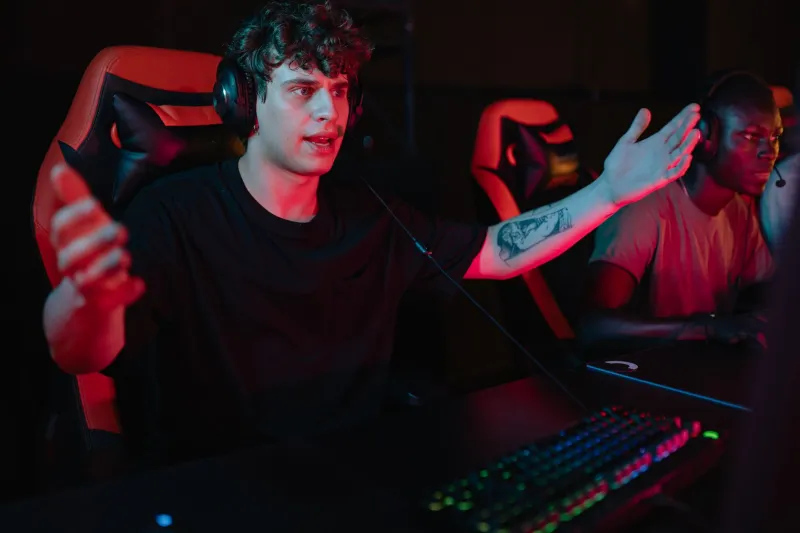
You know the feeling. You're in a comfortable groove — reading the map, hitting your timings, making calls that feel almost automatic. Then the viewer count ticks up. Your teammate mentions they're recording the VOD for the team Discord. Or worse, someone in chat says your opponent has been studying your streams.
Suddenly, your hands feel like they belong to someone else.
This isn't a skill problem. It's not even really a confidence problem. It's a well-documented psychological phenomenon, and it's hitting competitive players at every level — from weekend warriors grinding ranked on 88CLB Arena to pros performing on broadcast stages in front of thousands. Understanding what's actually happening in your brain is the first step to doing something about it.
The Science Has a Name (And It's Not Pretty)
Sports psychologists call it social facilitation — except the name is a little misleading, because being watched doesn't always make you perform better. The original theory, dating back to the early 1900s, suggested that an audience boosts performance. But follow-up research got more specific: audiences improve performance on well-learned, automatic tasks and tank performance on tasks that require conscious, complex decision-making.
Guess which category competitive gaming falls into.
When you know you're being watched, your brain shifts from System 1 thinking (fast, intuitive, automatic) to System 2 (slow, deliberate, self-monitoring). In everyday life, that shift is useful. In the middle of a clutch 1v3, it's catastrophic. You start second-guessing your crosshair placement. You overthink the rotation call. You hesitate on a trade you'd normally take without blinking.
Psychologists also point to something called evaluation apprehension — the anxiety that comes not just from being observed, but from being judged. The moment you start wondering what your audience thinks of that play you just made, you've already lost a fraction of your focus. In competitive gaming, fractions are everything.
Opponents Are Watching Too — And They're Taking Notes
Here's a layer that a lot of streamers don't think about until it's too late: your public stream is a scouting report.
If you're competing in any serious capacity — whether that's ranked ladders, open qualifiers, or organized tournaments through a platform like 88CLB Arena — broadcasting your gameplay live means opponents can study your tendencies in real time. Your preferred angles. Your rotation habits. The way you play when you're tilted versus when you're comfortable. All of it is on display.
Several high-profile esports players have quietly stepped back from streaming during active competitive seasons for exactly this reason. It's not just about distraction — it's about information security. When your playstyle is an open book, adaptable opponents will exploit every chapter.
This creates a unique double pressure: you're anxious about performing well for your audience and subtly aware that someone with a competitive agenda might be watching. That cocktail of stress is hard to shake once it's in your head.
The VOD Problem Nobody Talks About
Audience anxiety isn't limited to live viewers. It shows up in a different but equally damaging form when players know their footage will be reviewed — by coaches, teammates, or the broader community.
Some players actually perform worse in scrimmages they know are being recorded for team review. The awareness that every mistake will be dissected in a post-session breakdown changes how they play. Instead of experimenting with aggressive reads or unconventional strategies, they default to safe, predictable choices. They're not playing to win — they're playing to avoid looking bad on the tape.
That's a problem. Scrims are supposed to be the space where you take risks and learn. When performance anxiety creeps into practice, it poisons the whole development process.
Real Players, Real Consequences
This isn't abstract. Look at competitive history and you'll find players who were quietly dominant in solo queue or team practice but visibly struggled when broadcast pressure turned up.
The pattern tends to look the same: clean mechanics, sharp game sense, strong fundamentals — until the stream goes live or the tournament stakes rise, and then the errors compound in ways that don't match the player's actual skill level. Commentators call it choking. Teammates get frustrated. The player knows something is wrong but can't name it.
Naming it — performance anxiety under visibility — is actually the first meaningful step toward fixing it.
Practical Techniques That Actually Work
1. Desensitize through controlled exposure. If streaming makes you anxious, the answer isn't to stream less — it's to stream strategically. Start with low-stakes sessions where you explicitly give yourself permission to play badly. Narrate your thought process out loud. The goal isn't performance; it's comfort with being visible. Over time, the presence of an audience stops feeling like a threat.
2. Build a pre-game routine and protect it. Elite athletes across every discipline use pre-performance rituals to signal to their brain that it's time to compete, not spectate. For competitive gamers, this might mean a specific warmup sequence, a breathing exercise, or even just five minutes away from chat before a match. The routine creates a psychological buffer between "person being watched" and "competitor in the zone."
3. Anchor your focus to process, not outcome. One of the most effective mental reframes is shifting your attention from how you look to what you're doing. Before each round or match, identify one or two specific process goals — crosshair discipline, communication timing, resource tracking. When your brain is occupied with concrete tasks, there's less bandwidth left for audience anxiety.
4. Treat the camera like a teammate, not a judge. This sounds almost too simple, but reframing your relationship with your audience changes the emotional weight of being watched. Your viewers aren't a jury — they're along for the ride. Some of the best streaming personalities in competitive gaming have built massive followings not by playing perfectly, but by playing authentically. Mistakes included.
5. Practice under simulated pressure. If you compete in organized tournaments through 88CLB Arena, use every match as a pressure inoculation session. The more often you compete with something on the line, the more familiar that heightened state becomes — and familiarity breeds control.
Visibility Is a Skill
Here's the reframe that matters most: being good at competing while being watched is its own learnable skill. It's separate from mechanical ability, game knowledge, and communication. And like any skill, it responds to deliberate practice.
The players who thrive under the lights — who seem to get better when the stakes are highest — aren't built differently. They've just put in the reps on the mental side of the game that most players skip.
You don't have to go dark to compete clean. You just have to understand what's happening when the audience shows up — and train for it like you would any other part of your game.