Mind Over Meta: The Mental Game That Separates Good Players from Tournament Champions

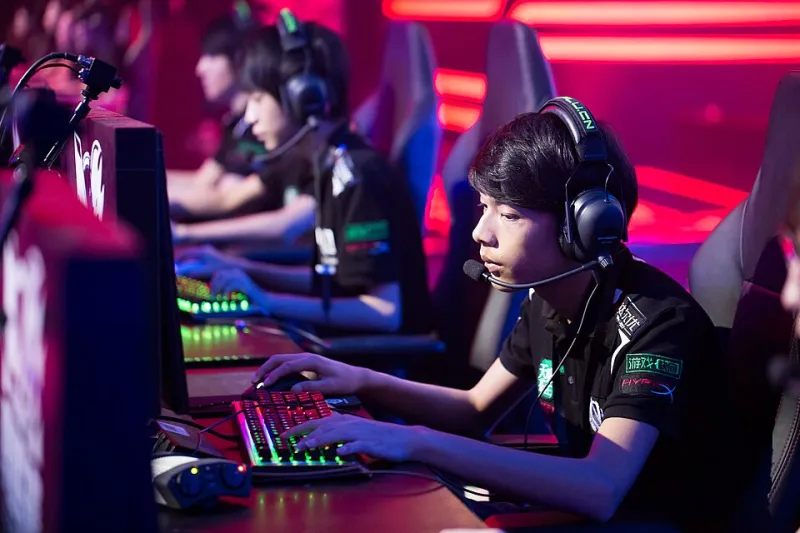
Photo: U.S. Air Force photo by Airman William Tracy, Public domain, via Wikimedia Commons
You've been there. Final round. Your team is down. The entire match — maybe even your tournament run — hinges on the next thirty seconds of gameplay. Your hands go a little cold. Your breathing gets shallow. And just like that, the muscle memory you've built over hundreds of hours starts to feel like it belongs to someone else.
That moment? That's not a skill gap. That's a mental gap. And according to sports psychologists who work directly with competitive gaming organizations, it's one of the most trainable aspects of performance in the game.
Why the Brain Treats a Tournament Round Like a Threat
Here's the thing most players don't realize: your brain doesn't distinguish well between a physical threat and a high-stakes competitive situation. When the pressure spikes, your body kicks into a mild stress response — cortisol rises, your focus narrows, and your working memory (the part responsible for adapting your strategy in real time) takes a hit.
Dr. Melissa Hartman, a performance psychologist who has consulted with multiple North American esports organizations, explains it plainly: "The nervous system doesn't know the difference between a lion chasing you and a championship match going into overtime. The physiological response is similar, just scaled down. Players who learn to regulate that response are the ones who perform when it counts."
This is exactly why two players with identical mechanics can have wildly different tournament results. Consistency under pressure is a skill — and it can be trained.
Visualization: The Technique Borrowed from Traditional Sports
If you've followed any high-level traditional sports coverage, you've probably heard athletes talk about visualization. It's not mystical — it's neuroscience. When you vividly imagine performing an action, your brain activates many of the same neural pathways it would during the actual performance.
Pro esports players have adopted this technique in a big way. Before a match, many top competitors spend time mentally walking through specific scenarios: clutch 1v3 situations, critical objective calls, communication breakdowns and how they'd handle them. The goal isn't to predict exactly what will happen — it's to make the emotional experience of high-pressure moments feel familiar before they arrive.
Try this before your next 88CLB Arena bracket match: spend five to ten minutes in a quiet space, eyes closed, visualizing yourself in a tight, high-stakes situation. Don't just picture winning — picture the moment of pressure itself, and then picture yourself responding calmly and effectively. The more sensory detail you add (the sound of your teammates in voice chat, the visual of your screen, the feel of your mouse), the more effective the exercise becomes.
Breathing Isn't Just for Yoga Classes
Controlled breathing is probably the most underrated performance tool in competitive gaming. It sounds almost embarrassingly simple, but the research behind it is solid. Slow, diaphragmatic breathing activates the parasympathetic nervous system — essentially hitting a biological "calm down" switch.
A number of pro players have gone public about using box breathing (inhale for four counts, hold for four, exhale for four, hold for four) during brief pauses in gameplay — loading screens, respawn timers, between rounds. It takes about thirty seconds and can measurably reduce the physical symptoms of performance anxiety.
If you're competing in an 88CLB Arena tournament and you feel the nerves creeping up, don't scroll your phone during a break. Use that time to breathe deliberately. It sounds low-tech because it is — but low-tech doesn't mean ineffective.
The Routine Ritual: Building a Pre-Match Protocol
Every serious competitor benefits from a consistent pre-match routine. This isn't superstition — it's priming. A reliable sequence of behaviors before competition helps signal to your brain that it's time to perform, reducing the cognitive overhead of "getting in the zone" and making that state more automatic over time.
Your pre-match routine doesn't need to be elaborate. It might look like: a ten-minute warm-up in aim trainers or custom lobbies, a specific playlist that gets you focused, a quick review of your team's strategy notes, and that breathing exercise mentioned above. The key is consistency. Do the same things in the same order before every serious match, and over time your brain starts to associate that sequence with peak performance.
Coach Danny Reyes, who has worked with several grassroots teams that have competed through community platforms like 88CLB Arena, puts it this way: "I tell my players — the routine isn't about luck, it's about removing variables. You want your mental state walking into a match to be as predictable as your crosshair placement."
Tilt Management: The Clutch Skill Nobody Talks About
Here's an uncomfortable truth: the biggest mental challenge for most competitive players isn't performing under pressure — it's recovering from mistakes in real time. Tilt is the enemy of the clutch moment. And tilt almost always starts with one bad play that the player can't let go of.
Cognitive reframing is the tool psychologists recommend here. When you make an error, the instinct is to dwell — to replay the mistake, to berate yourself internally. High-level performers learn to interrupt that loop with a deliberate mental reset. Some players use a physical cue (tapping the desk, taking a breath) paired with an internal phrase like "next play" or "reset" to signal to themselves that the mistake is done and the next moment is what matters.
This sounds simple in theory and is genuinely hard in practice. But like mechanics, it improves with repetition. Start practicing it in ranked play, so by the time you're in a tournament on 88CLB Arena, it's already a habit.
Building Your Mental Game Alongside Your Mechanical Game
The esports world has been slow to treat mental performance as seriously as mechanical skill, but that's changing fast. Top-tier organizations now have dedicated performance coaches and psychologists on staff. For players grinding their way up through community tournaments and platform ladders, the good news is you don't need a team psychologist to start building these skills.
Visualization, breathing regulation, pre-match routines, and tilt management are all accessible, free, and genuinely effective. Treat your mental game the same way you treat your mechanics: as something that requires deliberate practice, patience, and consistency.
The players who make it to the top of the bracket aren't always the ones with the fastest reflexes. More often, they're the ones who've figured out how to stay calm when everyone else is falling apart. That's a skill. And it's yours to develop.